Saturday, 17 November 2018

The ins and out of an ostomy bag.

In the medical field , everything has a use and it’s own job and responsibilities. Variations of one thing in the hospital could have hundreds of jobs, all surrounding the goal to help people. That’s the case here with the Ostomy bags. There are so many different types of ostomy bags and you really have to get into the knowledge of them all to make sure that you are properly and accurately using the right ones. An ostomy if a hole that’s created by your surgeon that helps assists in the day to day activities that is, going to and from the bathroom. With this surgery, it helps those unable to actively move to and from the restroom with ease , a helping hand with disposing of the waste.


It’s commonly found with people who are experiencing malfunction in the digestive or urinary systems. Nine times out of ten, if the option to get an ostomy is being recommended by your surgeon, it’s most likely the best option when it comes to saving your life. It’s a drastic change in your life though. People who undergo this lifesaving operation often find themselves dealing with the mental back lash that comes with having an ostomy bag. The way you see your body would be different which could possibly take a toll on your self image. That’s why it’s strongly encouraged to maintain well connected with your support system to prevent feeling isolated and alone.


There’s many different types of ostomy bags that you have at your disposal choose from that range in all types of sizes and all types of shapes to help you better adapt to the transition of the day to day life with an ostomy bag. There are so many selections such as one-piece, two-piece, drainable, close-end, pre-cut, cut-to-fit, flat, convex, and pediatric ostomy bags. Each of them have different descriptions that better help fit different variations of needs that’s need to be met when it comes to obtaining and living with an ostomy bag. Some people are subjected to have to buy their own ostomy bags but there are a lot of different prices available to help you find the perfect one for you.
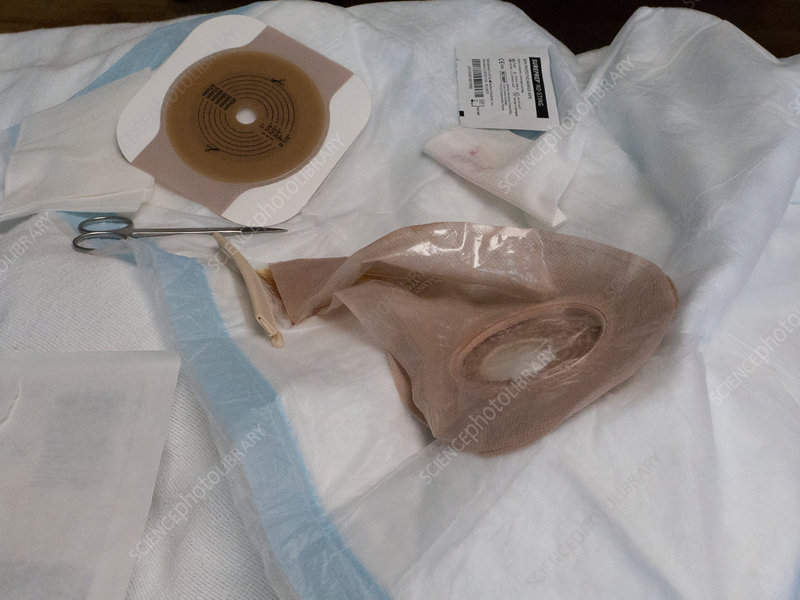


Based on the type of surgery you have that requires you to need an ostomy bag, whether it be a colostomy, ileostomy, or an urostomy, it will help you better decide which bag would be the best selection to have. It is important to maintain regular self-care of your stoma, which is the part of your ureter, large or small bowel which appears on the outside of your skin through your incision site made by your surgeon and typically connected to the external pouch of your bag for easy drainage. Regularly keeping up with the cleaning of this part prevents any infections and for smoother day to day living conditions with the ostomy bag. At Byram Healthcare, they are dedicated to helping the lives of their patients and making everyday all the more easier no matter the condition of their bodies. They are committed to helping people live their lives as normal as they possibly could under the circumstances of the situation they’re in that causes them to have an ostomy bag. 


Sunday, 4 November 2018

Various Stoma Products That You Should Know About

The great thing about living in this day and age is that you can pretty much get anything you want if you are willing to cough up the money to pay for it. We are no doubt living in the best period of time as far as having an ostomy goes, since there are just so many different products online that are available for you to buy. If you have had an ostomy for quite some time like I have, then you know the difference between having the right products at your disposal and having the wrong ones. We all have our favorite go to products and brands that keep our ostomies going from day to day, but did you know that there may be some products that you are missing out on? That’s right - today I am going to be writing about some products for your stoma that you could and should be using if you are not already. For all my novice ostomates out there who are reading this, this article should serve as a guide for you as you go through your ostomy journey. For my veterans out there, perhaps you can learn something new from this article as well. So without further ado, let’s talk about some stoma products that you should be using if you are not already.


The first product that I want to talk about is called a stoma plug. If you thought that the only thing you could throw on your stoma was an ostomy pouch, then you are totally not ready for what is about to come next. A stoma plug is a small cap that you can attach to the skin barrier in place of where your ostomy pouch should go. This stoma cap is not a different version of an ostomy pouch or anything like that; rather, it is something totally different. While an ostomy pouch will catch and hold the content that comes out of your stoma, a stoma plug will simply keep everything inside your stoma until you take it off. There are actually a lot of uses for a stoma plug,


but the main one that seems to be the most popular is for when people are wanting to get intimate with that special someone. Rather than have to deal with an ostomy pouch slinging around while you are doing your thing, you can use a stoma plug and keep everything sealed up while you have a good time. People also like to wear stoma plugs if they are doing certain physical activities like swimming or something like that. Keep in mind, however, that you should not wear a stoma plug for more than 20 to 30 minutes at a time, since you don’t want your stoma to become too backed up. 


Another product that I want to talk about for people with ostomies is called a skin barrier, or wafer. Now I am sure that everyone who has an ostomy knows what a skin barrier is, since you likely have to change it yourself everyday. However, did you know that there are a lot of different kinds of wafers available for people with ostomies? Since all of our bodies are different and our stomas unique, it makes sense that not everybody can make use of the same wafer. That is why there are actually a lot of different types of wafers for different people with different needs. 


Monday, 12 March 2018

Getting over your fear of your stoma

I know that doing new things is not really fun.  Having an ostomy is not really fun either.  But once you have one it is time to start living again.  Many people are actually happy because it is truly helping their health, but there is always the ramifications of surgery. Coping with a whole new style of life can be complicated, but it is even worse in your mind than it is in real life.  That is the struggle that many go through not only early on, but for some people, this mental struggle comes later.  My only goal is to let you know that it is ok to feel the struggle.  The pain and fear of not being the same again or not feeling as pretty as before are real and ok.  Now I know it is hard to hear, but in real life really does get back to normal. With an ostomy bag, I still do crazy things and hike all around the world.


Don't get me wrong I was super afraid of not being able to do anything with an ostomy bag on my hip.  The idea of having a bag that could be seen by everyone was a struggle to me.  I was simply afraid that everyone would see it and I would never be able to be free of the look.  But I was ver much wrong.  In fact, almost no one knows that I even have a stoma and that is because of fantastic gear and recommendations from thousands of people who are willing to go out of their way to work with you.


I use my previous experience with my own life to help me with my stoma.  I am a big fan of concealed carry.  In fact, I concealed carry a sidearm every single day.  The principles for being discreet are the same as having an ostomy bag.  The goal is to not print and that can be done with proper fitment and placement.  The ability to have the best gear is part of the answer to keeping your ostomy bag hidden.  But it is not simply the best, but the best for you.  We all have different body types so what can work for one person won't work for another.  The same goes for concealed carry as well. My body type does not allow for appendix carry at all. It is never comfortable and never works when I sit.  Appendix carry is the most popular form of carrying in 2021 but that is not always the best choice.  Do what fits your body and fits you life. 


The world is my oyster when it comes to information and I try to find as much as I can.  I love talking to pharmacists whenever I can on what is new and what they are hearing works the best and where.  Those conversations and also following people on social media have given me lots of ideas and also let me know not to try some things.  But take it all with a small grain of salt, because remember, we are all different.  Still, I love to learn and also to get better at my own setup.  I pretty well know for being a normal guy.  No one knows I have a stoma unless I tell them and that is pretty cool. 


Sunday, 4 February 2018

Ileostomy: An Overview

An ileostomy is a surgical procedure to treat the bowel after the lower part of the digestive tract is deceased or damaged. This surgical procedure results in the creation of an opening in the abdomen to allow waste materials to leave the body prematurely.

During the procedure, a hole is created in the abdomen. The end of the small intestine is then passed through that hope to create a stoma. Due to the rest of the bowel ahead of the ileum or small intestine bypassed, waste materials leave the body through the stoma instead of the anus. Those waste materials fall into an ostomy pouch fitted over the abdomen in a way that the stoma opens into that pouch.

You may need an ileostomy if all or a significant part of your colon is removed or bypassed. Diseases that might put you in an emergency to receive an ileostomy mainly include ulcerative colitis and Crohn’s disease.

Surgeries that usually require an ileostomy

  • Colectomy, also known as colon resection
  • Small bowel obstruction
  • Total proctocolectomy with ileostomy

An ileostomy can be short or long term.

Having a short term ileostomy means that you may retain your rectum and anus after getting your colon removed. This ostomy will allow your rectum to recover until your surgeon decides to connect it to the digestive tract.

A long-term ileostomy is when the rectum and anus are removed. This ileostomy is usually permanent because there are not rectum and anus to allow the patient to get the normal bowel functions back.

The creation of an ileostomy involves an incision in the abdominal wall. The surgeon then disconnects the small intestine from the colon and pulls the end of the ileum through that incision in the belly. It means that a stoma is essentially a part of the intestine sticking out on the belly.

In some cases, the surgeon may want to create an internal reservoir, which sits over the anal canal. It is called a J-pouch, or ileoanal reservoir.

Before ostomy surgery

Ostomy surgery is stressful, just like other surgeries. You may have a lot of concerns in your mind before surgery. Therefore, understanding how to prepare for it and how to deal with the post-surgery situation is necessary.

First, you have to tell your doctor about the medicines and supplements that you currently take. Some of those may prove counterproductive before or after surgery. For instance, you may need to avoid taking blood thinners. Your doctor will provide complete instructions regarding which medicines to take and which to stop.

Ileostomy surgery aftercare

You will need to have bed rest for a few days after surgery. During this time, the doctor and surgeon will instruct you to avoid any physical exertion. They will, however, encourage you to walk around in the hospital to activate your bowels. A nurse will tell you how to take care of your stoma and use an ostomy pouching system.

You will need to be careful during the first six weeks after surgery. Six weeks is the minimum time your bowels will take to recover from the impact of surgery. You may have to stay away from any strenuous activities, including gym workouts, jogging, or aerobic exercises, during this time.

You will have to remain in touch with your doctor and ostomy care nurse to get direction about your physical movements and diet.

Friday, 10 November 2017

Different Types Of Colectomy Surgery

If we explain it in simple words, a colectomy is the surgical removal of the entire or a part of the colon. People suffering from inflammatory bowel disease (IBD) are usually the candidates of colectomy. This surgery aims at treating many other intestinal conditions. The spread of disease and location of the problem is the factors that determine the extent of the colon to be removed.

It is worth mentioning that not every surgery aimed at treating IBD will fall into the category of colectomy. You will have to speak to your doctor and surgical team before undergoing the surgical treatment to remove all or a part of your colon. In this article, we will discuss different types of colectomy surgery to help you understand why you may need to undergo this procedure.

Proctocolectomy

This surgical method involves the removal of the colon along with the rectum. The rectum is more like a reservoir that holds stool before it is excreted out of the body through the anus. With the rectum removed, you will need a new way to get rid of your intestinal wastes. That’s where an ileostomy comes in. This intestinal diversion results at the end of the small bowel pulled out through a cut in the belly to allow fecal wastes to leave the body.

J-Pouch surgery

This surgery can be done during proctocolectomy or after a few months of it. J-pouch refers to an internal pouch, which is also known as an ileal pouch-anal anastomosis (IPAA). During this surgery, the surgeon folds the end of the small bowel into itself to form the shape of a “J” that acts like a rectum. A cut at the bottom of this pouch connects it with the anus, allowing the patient to expel bodily wastes through the anus.

Ileoanal Anastomosis

This procedure also allows the patient to expel bodily wastes through the anus. During this surgery, the surgeon connects the small intestine to the anus after removing the colon and rectum. Initially, you may have to live with an ileostomy for a few weeks or months to allow your small bowel to recover well enough to ensure Ileoanal Anastomosis.

Total colectomy

During a total colectomy, the surgeon removes your entire colon. Some people confuse it with proctocolectomy. However, the difference here is that a patient retains all or a part of the rectum after a total colectomy. Generally, you will need an ileostomy after this surgery. Your surgeon may choose to give you an ileorectal anastomosis, which can eliminate the need for an ostomy. Depending on your condition, the ileostomy you get may be permanent or temporary.

Partial colectomy

The surgical procedure aimed at removing a part of your colon is known as a partial colectomy. People who have Crohn’s disease, colon cancer, or diverticulitis are the candidates for this treatment. This procedure results in the removal of the diseased part of the colon and the connection of two healthy ends. It can also result in the creation of a colostomy, which is a bowel diversion that brings the end of the colon out through the belly.

You can discuss all these types of colectomy with your doctor.

Thursday, 21 September 2017

Taking Care Of Your Stoma After Surgery

Except for altering the excretory pathway, a stoma doesn’t have to make any impact on your life. You should be able to live the life of your choice. In this article, we will discuss how to take care of your stoma after surgery.

How does a stoma look after surgery?

A stoma is moist, red, and soft to touch. It is a little protruded from the surface of the abdomen. At the start, it will be a little swollen, but this swelling will subside with the passage of time. It generally takes six to eight weeks for your bowel to recover after surgery, and this is the exact duration required for your stoma to heal.

The function of the stoma starts a few days after surgery. The output in the first few days will be more liquid and have a strong odor. Over time, the consistency of the stool will thicken, and the odor will subside substantially. During the recovery phase, you will need to stick to a more balanced diet. Your doctor will tell you when you may return to a usual diet.

During the first few days, there may be some noisy winds passing out of your stoma frequently, which is perfectly normal. This frequency will reduce as your bowel recovers.

After urostomy surgery, your stoma will start functioning right away. The urine passing out of the stoma might be a little reddish during the first few days, but you do not need to worry about it.

How to take care of your stoma

It is crucial to ensure good health of the skin around the stoma. Irritation in this part of the skin can result in a compromised seal with the skin barrier of the ostomy appliance. This compromised seal can worsen the skin condition further. You will want to stop this vicious cycle at any cost.

Here are a few tips that may help you keep your peristomal skin healthy.

  • Before applying the skin barrier, make sure that the peristomal skin is clean and dry.
  • While creating an opening in the skin barrier, be sure to create it right according to the shape and size of your stoma.
  • There has to be a seamless contact between the skin barrier and the peristomal skin. You may want to apply a bit of pressure on the skin barrier to ensure proper adherence.
  • Be sure to change your appliance as soon as you feel any irritation or itching, no matter how minor it may feel.
  • You will want to check the size of your stoma regularly, particularly when you have a hernia.
  • If you want to use accessories to take care of your stoma, make sure that those are appropriate for your stoma and peristomal skin.

There are different types of ostomy appliances available. You will need to choose one that is most suitable for your ostomy. It will depend on whether you have an ileostomy, colostomy, or urostomy. If you are not sure which ostomy appliance you should choose, you may want to contact your ostomy care nurse for guidance.

Thursday, 13 July 2017

An Overview Of A Stoma

Before an ostomy surgery, you may have a lot of questions regarding what a stoma is and how to manage it properly. In this article, we will discuss the types of stomas and how to take care of them properly.

What is a stoma?

In a literal sense, a stoma is an opening that your doctor creates on your abdomen to reroute the passage of wastes away from their natural pathway. This alternative pathway essentially bypasses a diseased segment of the excretory tract. A stoma either connects ureters or intestines to the outside of the body.

Looks and feel of the stoma

A stoma is generally quite swollen right after surgery. Its size, however, reduces gradually over time. It takes about six weeks for the stoma to settle down to a permanent shape and size.

The color of the stoma may range from pink to red. This color is due to the mucous membrane, which is also present at the inside of the mouth. Due to the absence of any nerve endings, a stoma doesn’t have any sensation, which means that it is not painful to touch. There can be a little bleeding when you clean the stoma, especially in the first few weeks after surgery, but it is not something to worry about. The bleeding should stop in a minute or two.

Understanding the digestive and urinary system

The digestive system

When you eat, your food travels down to the stomach through a food pipe. The stomach churns the food into pieces, and digestive juices there turn solid bits into the liquid.

The food then travels to the small intestine where absorption of nutrients takes place. These nutrients are supplies to the other organs.

The leftover waste materials move to the large intestine where absorption of moisture and electrolytes takes place. The large intestine turns liquid waste into a solid material, which is then expelled out through the anus.

The urinary system

The urinary system consists of kidneys, ureters, bladder, and urethra. Kidneys filter blood to extract urine, which is transported to the bladder through two small tubes called ureters. When the bladder fills with urine, you feel the need to urinate. The bladder squeezes to push urine to the urethra, from where it leaves the body.

Impact of a stoma on daily life

You will need some time to recover from the impact of stoma surgery. It generally takes six weeks for your bowel to adapt to its shortened length. Until you achieve that recovery, you are going to need to follow some restrictions to ensure proper prevention of complications.

The first thing that you are going to have to learn is the use of an ostomy pouch. An ostomy pouch fits over the stoma to collect waste materials. When this bag is full, you will need to empty or discard it, depending on the type of ostomy appliance you are using.

The skin of the stoma holds a key value in an ostomy care regimen. The optimum health of the peristomal skin allows the ostomy appliance to adhere to the body properly. You do not want this part of the skin to develop an irritation or any other complications.

You will need to follow a few food restrictions during the six-week period after surgery. These restrictions will help you avoid any complications related to digestion. In case you have a urostomy, you will not have to follow many food restrictions.

You may want to remain in touch with your ostomy care nurse or doctor to find answers to any questions that you may have in your mind.


Ostomy Belts Help In A Major Way

When it comes to ostomy products and accessories, the belts used may be needed from time to time. Before you utilize one there are a few det...